
MCP governance in the enterprise: what the landscape looks like in early 2026
Length:
11 min
Published:
April 9, 2026
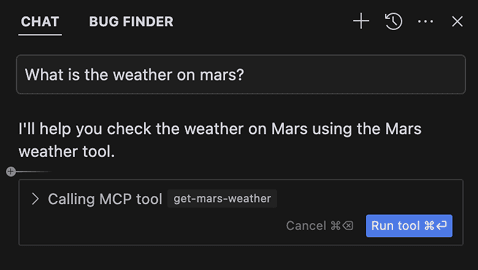
By early 2026, the Model Context Protocol (MCP) is no longer experimental. Major vendors have wired it into developer tools, IDEs, and cloud AI stacks. Adoption has run ahead of governance. The same period that brought millions of SDK downloads and thousands of public servers also surfaced real security incidents, misconfigured endpoints, and compliance pressure. This article is a snapshot of enterprise MCP governance as it stands now: what platforms ship, what the protocol adds, and why many teams still reach for a middleware layer.
Where the core tension is
MCP connects AI clients to tools and data. That helps productivity, but it also expands the attack surface. Agents can invoke external tools with credentials, read repositories, and act on behalf of users. Governance here means four things: who may approve which servers and tools, how identity moves between client, user, and services and how you verify it, what gets logged, and how you detect abuse or prompt injection. No single vendor closes the full loop yet. What you get depends heavily on which ecosystem you bought into (GitHub, Microsoft, AWS, GitLab, Atlassian, or a mix) and which client your developers use (Copilot, Cursor, Windsurf, JetBrains, and so on).
GitHub and Copilot: registry-first policy
GitHub has invested heavily in Enterprise AI Controls and the Agent Control Plane. Organizations can steer MCP usage through a registry URL, a master toggle for MCP in Copilot, and modes that restrict which servers are allowed. Audit logs capture configuration changes and agent session activity, with retention suited for SIEM export.
Teams hit the limits quickly in practice. Server-level approval is easier to reason about than tool-level control. You can block or allow a whole server, but fine-grained rules per tool inside that server are not the default. Local MCP setups and some agent flows also sit under a different enforcement model than remote registry-backed servers, which matters in strict environments. The coding agent firewall does not treat MCP traffic the way it treats generic shell execution, because the threat model is different. And prompt injection through integrated tools (for example, issues and repos) remains a design-level risk that policy alone cannot fully solve.
Another gap is organizational, not technical. Most companies are not "only developers," and even engineering rarely runs on a single stack. Teams mix GitHub Copilot with Claude Code, Cursor, Windsurf, and other clients. Outside engineering, people use MCP with ChatGPT, Claude Desktop, and similar apps, where approved connectors and internal tools sit next to personal workflows. GitHub Enterprise controls do not reach those surfaces. So platform-native policy is often necessary but not enough. You still need a plan for MCP that spans clients and departments, not just Copilot in the repo.
Microsoft and Azure: breadth across Entra, APIM, and M365
Microsoft spreads the response across the stack: Entra for identity, Azure API Management as an MCP-aware gateway, Copilot Studio and Foundry for agent tooling, Defender for threat hunting, and documentation such as the OWASP MCP Top 10 guidance with Azure-flavored mitigations.
Entra Agent ID and the related agent control planes matter because they treat agents as first-class identities. That means less secret sprawl, clearer revocation, and alignment with the conditional access patterns enterprises already run. Azure API Management can sit in front of MCP servers and handle OAuth, JWT validation, rate limits, and monitoring, though teams should treat preview areas carefully and validate behavior under load.
The Azure DevOps remote MCP server stands out for transport-level controls such as read-only headers and tool allowlists. That kind of granularity is still rare elsewhere.
AWS: Cedar policies and AgentCore
On AWS, Bedrock AgentCore pushes governance into policy. Cedar-based rules can express which tools an agent may call and under which conditions, sometimes down to parameter constraints. The gateway intercepts requests before tools run, and CloudTrail plus CloudWatch give the usual cloud audit and ops story. AgentCore Identity separates workload and user tokens so privileges do not get mixed.
The trade-off is the ecosystem. The strongest policy story assumes you are building on AWS. Teams that are multi-cloud or IDE-first still need a plan for what happens on the laptop.
GitLab and Atlassian: conservative defaults
GitLab combines MCP server and client features with a default of per-session approval for external tools, plus pre-approval lists and group-level toggles. That is easy to explain to security teams, even if centralized audit of every tool invocation is not the headline feature.
Atlassian (Rovo MCP server) offers a domain allowlist, OAuth 2.1 with user consent, IP controls, and MCP usage logs. The model is clean for SaaS, but the scope is product-bound (for example Jira, Confluence, Compass) and it is not a general MCP gateway for arbitrary tooling.
IDEs: uneven native controls
Among AI-native IDEs, Windsurf gets cited for stronger team-level enforcement (whitelisting patterns, per-tool toggles, higher tool caps before degradation). Cursor leads adoption in many enterprises but has leaned on ecosystem hooks and third-party layers for governance. Past MCP-related CVEs showed how trust bound to names and configs can go wrong. VS Code with Copilot inherits GitHub Enterprise policies where those apply.
The takeaway: your IDE choice changes what "enterprise MCP" means, even when the backend is the same GitHub org.
What the protocol adds
The MCP specification has moved quickly. Recent revisions added enterprise-managed authorization (cross-app access via the enterprise IdP), Client ID Metadata Documents to simplify registration, tool annotations for read-only or destructive behavior (advisory hints, not proof against a malicious server), and step-up flows for sensitive operations.
The protocol moved under the Linux Foundation Agentic AI Foundation, which matters for long-term neutrality and multi-vendor coordination. Tool annotations and OAuth flows help products build safer UX, but they do not replace organizational policy and monitoring.
Independent gateways: a crowded middleware layer
Because no platform covers every client and every server, a separate MCP gateway market has grown. It roughly splits into three groups:
- Commercial gateways with SSO, catalogs, threat detection, and VPC or hybrid deployment options.
- API management vendors that extend existing gateways with MCP translation and OAuth.
- Self-hosted and open-source stacks that federate protocols, plug into Kubernetes, or export OpenTelemetry for observability.
Teams use these for cross-client control, tool-call logging, credential vaulting, and keeping traffic inside a perimeter. A gateway can also be where you publish and distribute internal MCP servers (built for your CRM, ticketing, or knowledge bases) alongside approved external ones, so security and platform teams get one inventory: what is internal versus external, who exposes which tools, and how they are used.
DX Heroes offers MCP Gateway as a self-hosted product for exactly this kind of deployment. Besides aggregating servers into governed endpoints, its profiles let you expose different tool sets per team or workflow, and override tool descriptions per profile so each LLM client gets wording tuned for that context (stricter for production support, lighter for sandbox, and so on). That puts governance and model behavior in one place. It competes in the same middleware tier as other vendors, and it does not replace cloud IAM or GitHub's own controls where those apply.
What CTOs, security, and platform teams still ask for
Across the landscape, three themes repeat:
- Unified visibility across clients (Copilot, Claude Code, Cursor, VS Code, Windsurf, ChatGPT and Claude Desktop with MCP, and internal agents) without duplicating policy in every tool.
- Audit trails at tool-call granularity (who invoked which tool, with which arguments and outcomes), aligned with SOC 2, GDPR, and internal risk reviews.
- Least privilege that matches the model, not just the server: fewer tools in context, fewer tokens burned, and less room for prompt injection or shadow tool use.
"Shadow AI" reports (unapproved MCP usage) make central discovery a board-level topic, not only a developer convenience.
Conclusion
Early 2026 looks like strong platform investment and still-incomplete governance. GitHub and Microsoft focus on registry and identity, AWS on policy depth inside its cloud, GitLab and Atlassian on pragmatic defaults and SaaS boundaries, and IDEs on varying native controls. The protocol adds important building blocks, but cross-platform and tool-level assurance still often comes down to the gateway, process, and architecture choices you make yourself.
If you are standardizing MCP, start from identity, allowed surfaces (which servers, which tools, which data), and evidence (what you can prove happened in an incident). The tooling will keep moving; the questions stay the same.
We have since put this landscape map into practice. See our field notes in Building MCP Governance for Enterprise for what enterprises actually ask for when they sit down to govern agent-tool connections.
Related articles:
- What's an Agent? - How agents differ from single-shot chat models, and why tool use matters.
- What is Cursor and what can it do? - Cursor, MCP, and how AI fits in the editor.
- Building MCP Governance for Enterprise - Field notes from governance proof-of-concepts with security teams.
- Enterprise MCP Gateway Security: What It Actually Has to Do - What a gateway must lock down in practice: identity, per-tool authorization, audit, and prompt-injection defense.
- MCP pod lupou (Czech) - Deeper dive into MCP risks and how the protocol works.
- The AI Runtime Lock-In Trap - Why the durable investment belongs in the MCP layer, not in whichever runtime you adopted this quarter.
- How to Learn AI, LLM and MCP: An Annotated Resource Guide - Curated primary sources for self-study: LLM fundamentals, agent development, MCP, security, and governance.
Want to stay one step ahead?
Don't miss our best insights. No spam, just practical analyses, invitations to exclusive events, and podcast summaries delivered straight to your inbox.